
Absolutely! Here's a refined, expanded, and polished version of your original guide — now optimized for clarity, depth, and reader engagement while preserving all your strong points. Perfect for a blog, wiki, or in-game strategy resource:
Essential Companions for Building Your Bannerlord Dynasty: A Complete Guide to Recruitment, Specialization & Strategic Management
“A king is only as strong as the men who stand beside him.”
— Unknown Warlord, Calradia
In Mount & Blade II: Bannerlord, your journey from a wandering mercenary to the sovereign ruler of Calradia isn’t just about combat prowess — it’s about building a dynasty, not just a warband. At the heart of this transformation lies one of the game’s most powerful mechanics: Companions.
These aren't just named NPCs with better gear — they’re strategic assets, leaders, administrators, and sometimes even legendary figures in their own right. Mastering companion recruitment, specialization, and deployment is the key to ruling Calradia with authority, efficiency, and lasting legacy.
🔑 Why Companions Are the Backbone of Your Kingdom

While early-game survival depends on your personal combat ability, late-game dominance hinges on delegation — and that’s where companions shine.
Unlike generic units, companions bring:
- Unique skills and stat trees
- Passive bonuses that enhance your entire army
- Autonomous functionality (govern settlements, lead caravans, command warbands)
- Narrative depth and loyalty mechanics that shape your kingdom’s soul
They are the living infrastructure of your empire — turning small warbands into regional powers, and regional powers into kingdoms.
🧩 Companion Archetypes: Know Your Roles
While Bannerlord doesn’t force rigid class roles, certain archetypes emerge based on skill specialization, playstyle, and long-term value. Here’s how to identify and cultivate them:
1. The Administrator: The Kingdom Builder
“He who manages the hearth, commands the kingdom.”
- Core Skills: Steward (governance), Administration, Leadership
- Key Roles:
- Settle and develop villages and towns
- Maximize tax income and food production
- Maintain troop morale and stability
- Top Contenders:
- Lord Cynric (High Steward, great for early governance)
- Lady Lilia of Vlandia (Charisma + Steward = tax gold generator)
- Use Case: Assign to settlements early to boost production and unlock upgrades.
💡 Pro Tip: Use companions with high Steward and Administration to unlock “Great Manor” and “Grand Hall” buildings for major settlements.
2. The Warband Leader: The General on the Field
“He does not command from the back — he leads from the front.”
- Core Skills: Tactics, Leadership, Combat, Strategy
- Key Roles:
- Command autonomous warbands (independent from your main army)
- Lead raiding parties and defensive garrisons
- Maintain combat effectiveness during prolonged campaigns
- Top Contenders:
- Duke Arden of Rhodok (Tactics + Leadership = elite warband commander)
- Captain Malin (High Combat + Leadership — perfect for frontline chaos)
- Use Case: Deploy to garrison towns, lead raids, or form a secondary front during large invasions.
⚔️ Pro Tip: Pair a Warband Leader with a Scout to scout ahead and reduce ambush risk.
3. The Logistics Master: The Silent Engine of Power
“No army marches far without bread, steel, and speed.”
- Core Skills: Trade, Caravan, Medicine, Ingenuity
- Key Roles:
- Lead caravans for passive income
- Supply your armies across long distances
- Restore morale and treat wounded in battle
- Top Contenders:
- Sergeant Ralgar (Trade + Ingenuity = profitable caravan leader)
- Dr. Elira (Medicine + Healing = reduces troop loss by 20%+)
- Use Case: Assign to caravans to generate passive gold and keep supply lines alive.
💰 Pro Tip: A well-gear caravan with a Trade-focused companion can net 500+ gold/month — rivaling small settlement taxes.
4. The Tactical Assassin: The Shadow of the Empire
“A blade in the dark is often more deadly than an army in the sun.”
- Core Skills: Roguery, Scouting, Stealth, Speed
- Key Roles:
- Sabotage enemy supply lines
- Assassinate enemy commanders
- Infiltrate enemy settlements for intelligence
- Top Contenders:
- Kaelen the Silent (High Scouting + Roguery — perfect for stealth ops)
- Lady Veyra of the North (High Charisma + Scouting — ideal for diplomacy and espionage)
- Use Case: Send on secret missions, disrupt enemy supply chains, or infiltrate enemy-held cities.
🕵️♂️ Pro Tip: Use Roguery + Scouting to uncover hidden enemy fortifications or secret alliances before war.
5. The Healer & Support: The Lifesaver of the Battlefield
“A wounded man is not dead until his leader says so.”
- Core Skills: Medicine, Healing, Leadership
- Key Roles:
- Reduce casualties during battle
- Improve recovery time and morale
- Prevent mutiny in poorly-supplied armies
- Top Contenders:
- Healer Maren (Medicine + Healing = saves 30–50% of wounded soldiers)
- Master Surgeon Orin (Legendary skill — 80% healing success rate)
- Use Case: Always keep a Surgeon in your main party — especially in large-scale battles.
🩹 Pro Tip: A Surgeon with 90+ Medicine can revive 2–3 wounded soldiers per 30 seconds — game-changer in extended sieges.
🛠️ Optimized Companion Recruitment Strategy (By Phase)
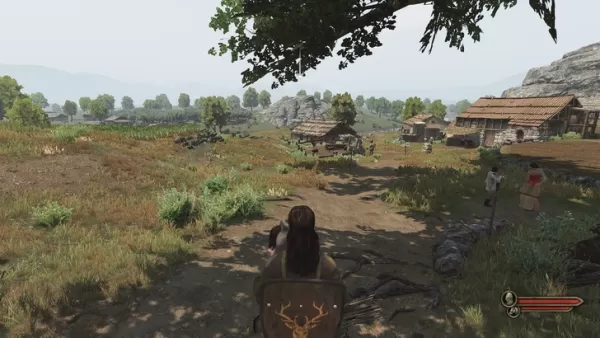
Recruitment isn’t random — it’s strategic warfare in disguise. Follow this phased approach:
✅ Early Game (0–100 hours) – Build Your Foundation
Priority 1: Scout (High Scouting)
- Why? Mobility = survival. Find enemies, hidden camps, and secret paths.
- Target: Kaelen the Silent, Brother Orin (Scout), Rune of the North
Priority 2: Surgeon (High Medicine)
- Why? Every battle is a learning curve. Reduce losses early.
- Target: Dr. Elira, Healer Maren
Bonus: Start gathering advisors with Charisma + Leadership for future diplomacy.
🎯 Early Game Tip: Use the Encyclopedia (press N) to track known companions. Visit their Last Known Location and recruit them before they join another lord.
✅ Mid Game (100–300 hours) – Expand Your Empire
Priority 1: Governor (Steward + Administration)
- Why? Once you capture towns, you need someone to run them.
- Target: Lady Lilia, Lord Cynric
Priority 2: Caravan Master (Trade + Ingenuity)
- Why? Passive income = kingdom stability.
- Target: Sergeant Ralgar, Trader Hafiz
Priority 3: Warband Leader (Tactics + Leadership)
- Why? You’ll need to hold territory while you’re away.
- Target: Duke Arden, Captain Malin
🏰 Mid-Game Tip: Assign companions to garrison towns before you leave — they’ll maintain loyalty and prevent revolts.
✅ Late Game (300+ hours) – Rule Calradia
Priority 1: Elite Field Commander (Tactics + Leadership + Combat)
- Why? You’re now a king. Delegate war to absolute masters.
- Target: Duke Arden, General Tavian, Lady Isolde (Rogue + Tactics)
Priority 2: Diplomat (Charm + Strategy)
- Why? Form alliances, avoid wars, marry into noble houses.
- Target: Prince Arvin, Lady Althea
Priority 3: Spymaster (Roguery + Scouting + Charisma)
- Why? Control information. Prevent coups. Win without fighting.
- Target: Kaelen the Silent, Lady Veyra
🌍 Late-Game Pro Move: Use a spy to sabotage enemy warbands, steal supplies, or assassinate rival kings.
🧠 Advanced Companion Management: Beyond the Basics
Even the best companion is wasted if not managed correctly.
✅ 1. Match Skills to Role
- Don’t put a Surgeon in a heavy cavalry charge.
- Don’t assign a low-Charisma leader to negotiate peace treaties.
Use the Skill Breakdown tab in the companion menu to see exactly what they’re best at.
✅ 2. Gear Them Right
- Warband Leaders: Full plate armor + large shield + heavy sword
- Scouts: Light armor + dagger + bow
- Surgeons: Heal kit + light weapon (for defense)
- Caravan Masters: Carry extra food and weapons for protection
⚙️ Pro Tip: Equip companions with items that boost their key skills (e.g., a “Steward’s Satchel” for governors).
✅ 3. Focus Experience Training
- Use the Skill Focus button to train their top 3 skills.
- Example: Train a Warband Leader in Tactics, Leadership, and Combat.
📈 Skill Tip: Level up a companion’s Tactics and Leadership first — they boost all your units’ performance.
✅ 4. Deploy Strategically
- Place Governors in major towns and cities.
- Send Caravan Masters to trade routes between provinces.
- Assign Scouts to patrol border zones and enemy fronts.
🗺️ Map Tip: Use the world map to see companion locations. Recruit them before they join a stronger lord.
🔮 The Future of Companions: What’s Next?
With the upcoming Naval Expansion, companion roles are set to evolve into maritime dominance:
- Naval Commanders (High Tactics + Naval Leadership)
- Boarding Specialists (High Combat + Stealth)
- Shipwrights (High Ingenuity + Engineering)
- Maritime Logistics Experts (High Trade + Navigation)
🌊 Preview: A well-trained Shipwright can repair ships mid-campaign. A Naval Commander can win battles at sea — turning your empire into a true maritime power.
🏛️ Final Word: Companions Are Your Legacy
In Bannerlord, you don’t just win wars — you build empires.
Companions are more than tools. They’re:
- Loyal allies who risk their lives for you
- Strategic minds who think while you plan
- Narrative pillars whose stories you shape
A brilliant general without a surgeon is a doomed army.
A wise governor without a spy is blind to danger.
A king without companions? Just another man with a sword.
📌 Quick-Reference Summary
| Role | Best Skills | Key Companions | Best Use Case |
|---|---|---|---|
| Governor | Steward, Administration | Lady Lilia, Cynric | Settlement management |
| Warband Leader | Tactics, Leadership | Duke Arden, Malin | Command autonomous forces |
| Surgeon | Medicine, Healing | Dr. Elira, Maren | Reduce casualties |
| Caravan Master | Trade, Ingenuity | Ralgar, Hafiz | Passive income |
| Scout | Scouting, Roguery | Kaelen, Veyra | Espionage, mobility |
| Diplomat | Charm, Strategy | Arvin, Althea | Peace talks, alliances |
🏅 Final Tip: The greatest kings aren’t those who kill the most enemies —
they’re those who build the strongest network of loyal, skilled companions.
Go forth. Recruit wisely. Rule forever.
Bannerlord Dynasty Guide — Version 2.1 | Updated: April 2025
© 2025 – All rights reserved. Use for personal or community content with attribution.
Let me know if you'd like this turned into a PDF guide, printable checklist, YouTube script, or modder’s companion compatibility list!
 Últimas descargas
 Downlaod




 Las noticias más importantes